
Understanding Your Investment: Water Heater Replacement Cost in Dayton, OH: Tank vs. Tankless Guide
Replacing a water heater in Dayton, Ohio requires balancing initial equipment investment against long-term fuel efficiency and local water hardness. Traditional atmospheric gas storage tanks provide reliable low upfront cost, while modern high-efficiency tankless units provide endless hot water and 20+ year lifespans when properly descaled.
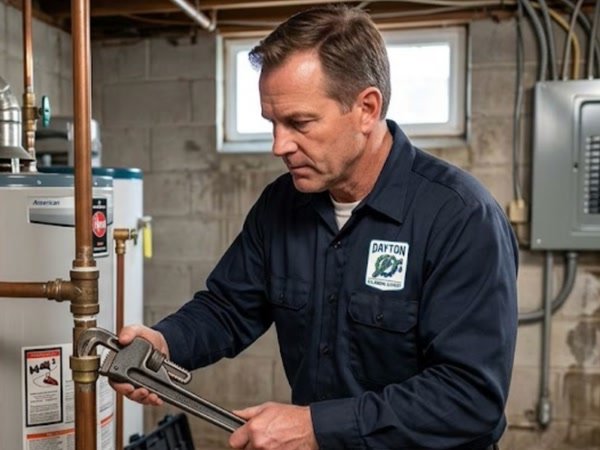
Key Factors That Determine Your Final Cost in Dayton, OH
Several technical and architectural variables influence the exact investment required for this project in the Dayton metro area:
Factor 1:Tank Capacity & Energy Efficiency Rating
A standard 40-gallon electric tank heater has the lowest purchase price, whereas a 50-gallon high-recovery commercial-grade gas unit or hybrid heat pump water heater carries higher initial equipment costs offset by lower monthly utility bills.
Factor 2:Venting Infrastructure & Chimney Flues
Historic Dayton homes frequently vented original water heaters into masonry chimneys. Modern building codes require double-walled B-venting or dedicated PVC power-vent piping through exterior rim joists, which influences installation labor.
Factor 3:Gas Line Diameter & Combustion Air Requirements
Converting from a 40,000 BTU storage tank to a 199,000 BTU whole-house tankless unit requires upgrading gas supply lines from 1/2-inch to 3/4-inch or 1-inch black iron or CSST to ensure safe gas volume.
Factor 4:Thermal Expansion Tank & Pressure Reducing Valves
The Ohio State Plumbing Code mandates thermal expansion tanks on closed municipal water systems across Dayton and Montgomery County to protect appliances from destructive pressure spikes.
Factor 5:Water Hardness Scale Defense
Dayton tap water tests between 15 and 20 GPG of mineral hardness. Installing an inline scale prevention cartridge or integrating a whole-home water softener protects new heat exchangers and preserves manufacturer warranties.
The Impact of Dayton's Hard Groundwater on System Lifespan
Water across Dayton, Kettering, Beavercreek, and Montgomery County originates from the Great Miami Buried Valley Aquifer. This water carries between 15 and 22 grains per gallon (GPG) of mineral hardness. Left unmanaged, calcium and magnesium crust form an insulating barrier that degrades heating elements, clogs valves, and accelerates galvanic corrosion in older supply lines. Investing in commercial-grade components and scale-defense filtration preserves your equipment and prevents early replacement cycles.
Our Transparent Written Quote Guarantee
At Dayton Plumbing Expert, we operate with complete financial transparency. When you schedule an appointment with our Brown Street team, you receive:
- Thorough On-Site Inspection: A licensed plumbing technician visually and mechanically inspects your fixtures, pipes, and surrounding infrastructure.
- Clear Explanation of Options: We explain repair vs. replacement options in plain English, highlighting the pros, cons, and long-term warranties of each choice.
- Written Upfront Quote: You receive an all-inclusive quote detailing parts, labor, permitting, and cleanup before any work begins.
- Satisfaction Assurance: All repairs and installations are completed strictly to Ohio State Plumbing Code with durable, commercial-grade components.
Frequently Asked Questions About Water Heater Replacement Cost in Dayton, OH: Tank vs. Tankless Guide
A professional installation of a 50-gallon atmospheric gas water heater in Dayton typically ranges between $1,600 and $2,600, including tank removal, disposal, brass shutoff valve, thermal expansion tank, and local municipal permit.
For households with high hot water demand, multi-bathroom morning routines, or limited basement space, tankless water heaters save up to 30% on gas bills and last 20+ years, double the lifespan of conventional tanks.
Without periodic flushing and water softening, hard mineral accumulation typically limits water heater lifespan in Dayton to 8 to 11 years. Regular maintenance extends tank life to 12-15 years.
Yes. Montgomery County Public Health and the City of Dayton require plumbing and gas permits for water heater replacements to ensure safe combustion venting, gas line integrity, and temperature-pressure relief valve discharge compliance.